 ultimate-guide
Is the South Bay Real Estate Market 2026 a Buyer's Market?
Last Updated: October 26, 2026
Quick Summary
The South Bay real estate market in 2026 is softer than a year ago, with the median sale price in the coastal Los Angeles County area hitting $1.3 million for the three months ending September 2026, down 12.4% year over year. Redfin rates the market 65 out of 100, or somewhat competitive, and 448 price reductions were counted in October 2026.
- Confirm geography, property type, and period before comparing any two South Bay price figures.
- Sellers who anchor to a 2025 comparable typically sit 30 to 60 days longer.
- A second price reduction or a cut of 5% or more usually signals a motivated seller.
- Mortgage approval typically takes 30 to 45 days from application to clear-to-close.
- Price to the most recent closed comp in your tier, not last year's sale.
Table of Contents
- South Bay Real Estate Market 2026: What the Data Shows
- South Bay Home Prices 2026: Median Sale Price and Year-Over-Year Change
- South Bay Housing Market Trends: Inventory, Days on Market, and Negotiability
- South Bay Homes for Sale: What Buyers Will Actually Find
- How Long Does Mortgage Approval Take When Buying in the South Bay?
- Buyer and Seller Decision Framework for 2026
- Planning Your South Bay Move With Coe Real Estate Group
- Frequently Asked Questions
South Bay Real Estate Market 2026: What the Data Shows
The South Bay real estate market in 2026 is softer than it was a year ago, and the numbers are unusually clear about it.
The South Bay real estate market is a local housing market defined by coastal Los Angeles County neighborhoods where inventory, price tier, and property type now move in different directions. A 12.4% decline is not a crash signal; it is a rebalancing signal, and it rewards buyers who understand which segment they're shopping in.
Below, we break down what the data shows, where the opportunity sits, and how to decide in a market that no longer behaves like 2022.
South Bay Home Prices 2026: Median Sale Price and Year-Over-Year Change
South Bay home prices in 2026 have moved in one direction at the headline level: down. The $1.3 million median sale price and the 12.4% year-over-year decline come from Redfin's South Bay housing market report, and they describe closed sales, not asking prices.
Redfin rates the local market 65 out of 100 on its competitiveness scale, which it labels somewhat competitive. Translation: homes still sell, but sellers are no longer dictating terms.
Which South Bay Is This? Defining the Boundary Before You Compare Numbers
"South Bay" is used for at least two different market areas, and the median price you see depends entirely on which one a data provider is measuring.
- The coastal Los Angeles County definition used in this guide covers the beach cities and the Palos Verdes Peninsula, neighborhoods such as Manhattan Beach, Hermosa Beach, Redondo Beach, Torrance, Rancho Palos Verdes, Palos Verdes Estates, Rolling Hills Estates, and San Pedro. This is the area the $1.3 million median and the 12.4% decline describe.
- The Santa Clara County definition used by some national portals covers Sunnyvale, Santa Clara, Cupertino, Campbell, Los Gatos, and Morgan Hill. Median prices there are typically higher and the year-over-year trajectory can differ by several percentage points from the coastal figure.
Before you act on any headline number, confirm three things: the geography (which cities are included), the property type (single-family only, or condos and townhomes too), and the period (a rolling three-month median behaves differently from a single-month snapshot). A 12.4% decline in one definition can coexist with a 3% gain in the other in the same month.
Neighborhood-by-Neighborhood Price Variation
Even inside the coastal definition, the market is not one market. In 2026, the spread is widening between walkable beach-adjacent inventory and inland or hillside inventory:
- Beach-adjacent neighborhoods (Manhattan Beach, Hermosa Beach) hold value best because supply is structurally constrained and the buyer pool is less rate-sensitive. Expect smaller year-over-year declines and shorter days on market here.
- The Palos Verdes Peninsula (Rancho Palos Verdes, Palos Verdes Estates, Rolling Hills Estates) shows the widest dispersion: view properties and newer construction still clear near ask, while dated homes on larger lots sit and take reductions.
- Inland and entry-tier neighborhoods (parts of Torrance, San Pedro) carry the steepest affordability pressure and therefore the most negotiability, but also the deepest buyer pool once rates tick down.
Use this as a screening framework, not a price list: pull the three most recent closed sales within a half-mile of any property you're considering, matched on beds, baths, and condition. If the comps disagree with the pattern, trust the comps.
How Price Tiers Are Behaving: Under $2 Million vs. $2 Million-$6 Million
The two tiers are telling different stories. Homes under $2 million face the steepest competition because that's where mortgage affordability bites hardest, a small rate change moves a large share of that tier's buyer pool in or out. The $2 million to $6 million tier carries more negotiability, more days on market, and sellers pricing against 2025 expectations that no longer hold.
South Bay Housing Market Trends: Inventory, Days on Market, and Negotiability
South Bay housing market trends in 2026 point to one conclusion: negotiability is back. Inventory growth alongside 448 active price reductions means buyers can ask for concessions that would have ended a conversation two years ago.
Nationally, the backdrop supports that read. The National Association of Realtors existing-home sales data shows existing-home sales up 1.5% in September 2026 with inventory at 1.60 million, while Realtor.com's 2026 housing forecast projected active listings rising 8.9% nationally.
Days on Market: What Selling Speed Actually Looks Like Now
Days on market turns a market narrative into a negotiating position. Here is how to read it:
- Days on market counts from list date to accepted offer, not to closing. A home that shows 40 days on market and then closes in 30 more was on the market for 40 days, not 70.
- The first two weeks set the trajectory. A listing that draws no offers in its first 14 days is already signaling a pricing problem; the longer it sits, the more buyers assume something is wrong and the wider the eventual gap between list and sale price.
- Relisted properties reset the clock. A home pulled and relisted shows a fresh days-on-market figure, so ask your agent for the cumulative days on market and the full listing history before you assume a property is new to the market.
A common pattern in 2026: sellers who anchor to a 2025 comparable instead of a current closed sale typically sit 30 to 60 days longer and accept less than a realistic day-one price would have fetched. The cost of overpricing is time plus the discount buyers demand once the listing looks stale.
Price Reductions and the Negotiation Math
A price reduction is a public admission that the original list price missed the market, and 448 in a single month tells you sellers are adjusting. What matters is the sequence:
- A first reduction of 2% to 3% usually signals a seller testing the market and still anchored to their original number. Expect limited flexibility on credits.
- A second reduction, or a cut of 5% or more, usually signals a motivated seller. This is where inspection credits, repair requests, and closing-cost contributions become realistic asks.
- A property that has been reduced and still sits is the strongest negotiating position a buyer can find, but verify why. A leased solar system, a probate or trust complication, or an undisclosed notice can explain the stall, and those issues need to be surfaced before you write an offer, not after.
For sellers, the inverse applies: price to the most recent closed comp in your tier, not last year's sale or your neighbor's asking price. A realistic day-one price typically nets more than a high list followed by two reductions, because the reductions become negotiating leverage for the buyer.
What This Means for Your Negotiating Position
Rising inventory, longer days on market, and visible price reductions give buyers leverage that did not exist in 2022, but leverage is tier-specific. In the entry tier, competition for well-priced homes remains real, so lead with a fully underwritten pre-approval and a clean timeline. In the upper tier, lead with inspection findings and ask for credits rather than waiving contingencies.
South Bay Homes for Sale: What Buyers Will Actually Find
South Bay homes for sale in 2026 offer more choice and more homework than buyers expect. You'll see single-family craftsman and Spanish-style homes, townhomes, and condos, with the widest selection in the $2 million-plus range and the tightest in the entry tier.
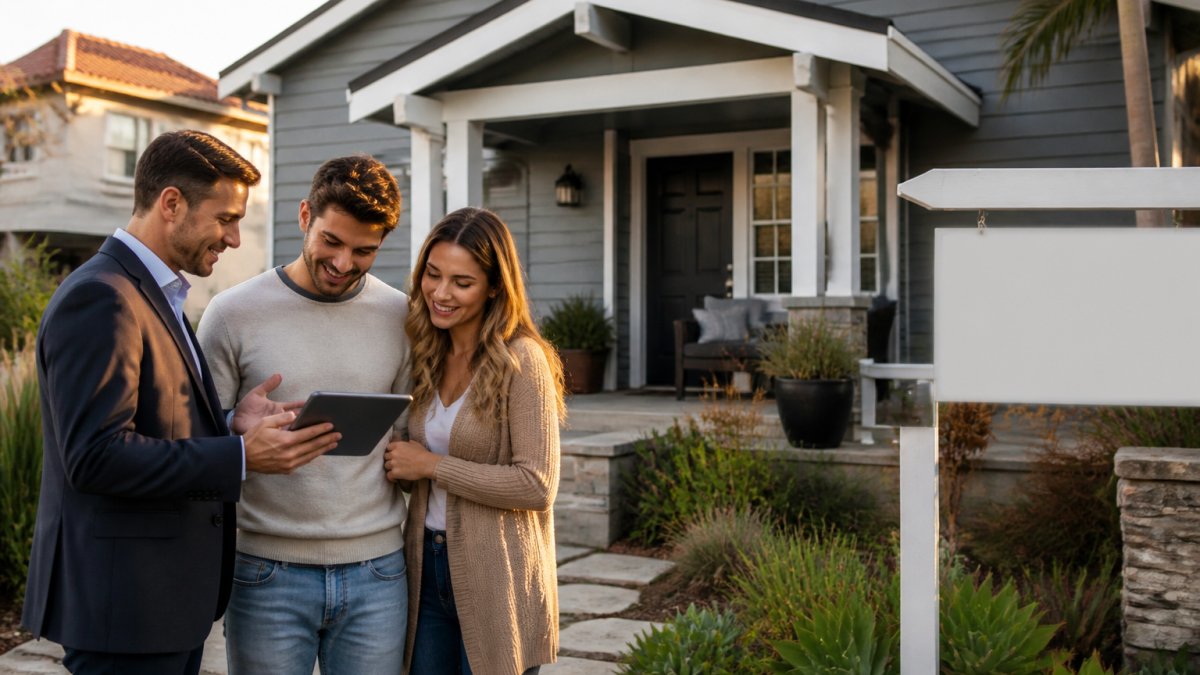
Here's what most guides miss: the listing you see on a portal is often already stale. A common mistake is touring properties on market 45+ days without asking why.
How Long Does Mortgage Approval Take When Buying in the South Bay?
Mortgage approval typically takes 30 to 45 days from application to clear-to-close for a conventional loan with complete documentation; pre-approval usually comes within 1 to 3 business days. In a market with 448 price reductions and rising inventory, that timeline lets you negotiate inspection and appraisal contingencies rather than waiving them.
The practical sequence:
- Pre-approval: 1 to 3 business days (gather W-2s, pay stubs, bank statements first)
- Offer accepted and escrow opened: 1 to 3 days
- Appraisal ordered and completed: 7 to 14 days
- Underwriting review: 10 to 21 days
- Clear to close and funding: 3 to 5 days
Watch out: a pre-approval is not a commitment. Changing jobs, moving large sums between accounts, or opening new credit during escrow can restart underwriting and blow your closing date.
Buyer and Seller Decision Framework for 2026
Use this framework to decide how to act in the current market rather than guessing.
Situation | Market signal | Recommended move |
|---|---|---|
Buyer, under $2M | Tight supply, high competition | Get fully underwritten pre-approval before touring |
Buyer, $2M-$6M | More inventory, more negotiability | Ask for credits and repairs; don't waive contingencies |
Seller, any tier | Price decline, 448 reductions | Price to the most recent closed comp, not last year's |
Investor | Rising inventory, softer prices | Underwrite cap rates on current rents, not projected appreciation |
Downsizer | Buy and sell simultaneously | Sequence the sale first, then negotiate a rent-back |
Best for: buyers and sellers who want a repeatable decision process instead of reacting to headlines. Skip if: you're buying purely on emotion and won't walk away from a bad number.
The PwC and Urban Land Institute Emerging Trends in Real Estate 2026 report captures the broader mood: participants rated 2026 real estate prospects 2.81 out of 5, up modestly from 2.75 for 2025.
Planning Your South Bay Move With Coe Real Estate Group
The South Bay real estate market in 2026 rewards preparation over urgency.
That's where Coe Real Estate Group comes in.
Get started with Coe Real Estate Group and make your next South Bay move on data instead of guesswork.
The market has shifted, and buyers and sellers who act on current closed sales rather than last year's headlines capture the advantage.
Frequently Asked Questions
Is 2026 a good time to buy a home in the South Bay?
The data points to more leverage for buyers than in recent years. The median sale price in the South Bay neighborhood of Rancho Palos Verdes was $1.3 million for the three months ending September 2026, down 12.4% year over year, according to Redfin. Inventory has grown, and Redfin rates the market 65 out of 100 on competitiveness, which it calls somewhat competitive. More listings and softer prices mean more room to negotiate, though you should still budget for mortgage rates and confirm your approval timeline before making offers.
Are South Bay home prices expected to rise or fall in 2026?
Recent data shows a decline rather than an increase. Redfin reported the median sale price at $1.3 million for the three months ending September 2026, a 12.4% drop from the same period a year earlier. Local market updates also describe rising inventory and more price reductions. That does not guarantee prices keep falling, but it does mean sellers should price realistically and buyers should study recent comparable sales in their specific neighborhood before writing an offer.
How competitive is the South Bay housing market in 2026?
Redfin scored the South Bay neighborhood market at 65 out of 100, describing it as somewhat competitive. That is a middle ground: well-priced homes still draw interest, but buyers are not facing the bidding wars common in tighter years. With inventory up and price reductions appearing in local updates, negotiation is more viable. Expect the most competition on turnkey homes in the $2 million-$6 million range, and more room to negotiate on properties that need work.
How long does mortgage approval take when buying a home in the South Bay?
The supplied research does not include South Bay-specific approval timelines, so treat any single number with caution. In practice, pre-approval can often be completed in a few days once your documents are in, while full underwriting and final approval usually take longer and depend on your lender, loan type, and how quickly you supply income and asset paperwork. Get pre-approved before you tour homes so your offer is credible, and ask your lender for a written timeline you can plan around.
Which South Bay neighborhoods does this market data cover?
The Redfin figures cited here are for the South Bay neighborhood of Rancho Palos Verdes, not every city that people casually call the South Bay. That distinction matters because Redondo Beach, Manhattan Beach, and Hermosa Beach each have their own price levels and inventory. Before you set a budget or list price, ask for data on the specific neighborhood and property type you care about, since a single median price can hide wide differences between blocks and between condos and single-family homes.