 how-to
How to Verify Property Title Status Before You Buy
Last Updated: November 2, 2026
Quick Summary
To verify property title, pull the recorded history from the county recorder where the property sits and confirm the seller's name matches the most recent recorded deed. Check the legal description, recording stamp, and chain of title, then run a lien search for mortgages, tax liens, and judgments. Online indexes are a starting point, not proof.
- Search by parcel identifier, not address, since parcel numbers stay tied to the land.
- The name on the most recent recorded deed, matched to the legal description, is the owner of record.
- A gap in the chain is a grantor who never appears as a grantee on a prior deed.
- An open mortgage with no recorded satisfaction stays attached to the property.
- Escalate to a title professional when the chain has gaps or a lien release is missing.
Table of Contents
- What Verifying Property Title Status Actually Involves
- Start with a Property Title Search Online
- How to Check Property Ownership Through County Records
- How to Find a Property Deed and Confirm It Is Current
- Run a Property Lien Search to Uncover Recorded Claims
- Review Mortgages, Transfer History, and Other Recorded Instruments
- Resolve Conflicting Records and Know the Limits of Online Searches
- When to Bring in a Title Professional for Your South Bay Purchase
- Frequently Asked Questions
What Verifying Property Title Status Actually Involves
Learning how to verify property title status means confirming who legally owns a property and what claims sit against it before money changes hands, so you verify property title records before committing.
A property title is the legal record of ownership in a property, including every transfer, mortgage, and claim filed against it. Verifying title status means checking that record against public land records and confirming the seller's name matches the current owner of record.
The Difference Between Ownership Verification and Title Insurance
Ownership verification is research you do. Title insurance is financial protection you buy.
A title search shows what is recorded today. Title insurance covers losses from defects that surface later, including forged documents or missed heirs.
Start with a Property Title Search Online
A property title search online is the fastest starting point, but it rarely tells the whole story.
Here is how to start:
- Find your county recorder's or clerk's official website
- Search by property address first, then by owner name
- Note the parcel identifier, also called an APN or parcel number
- Pull the list of recorded instruments and their dates
- Save or print each document for your file
The parcel identifier matters more than the address. Addresses change and get renumbered. Parcel numbers stay tied to the land.
Online portals often lag behind the counter, so a document recorded this week may not appear yet. If timing is tight, call the recording office and ask.
How to Check Property Ownership Through County Records
To check property ownership, go to the county recorder or clerk where the property sits and pull the most recent recorded deed.
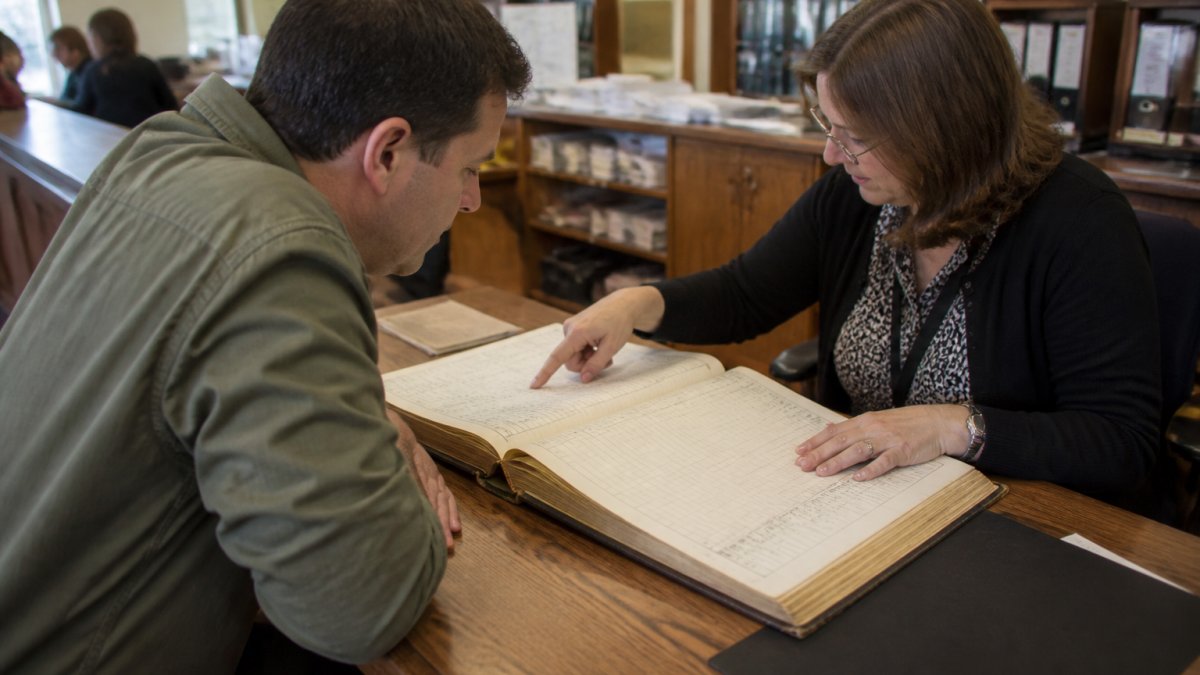
County records are organized by jurisdiction, not by convenience. Confirm the county first using the county recorder locator from the National Association of Counties or the state's own recorder directory.
Then work through three indexes:
- Grantor index: searches by the seller or person giving the interest
- Grantee index: searches by the buyer or person receiving it
- Parcel index: searches by the parcel number, when the county offers it
Names get misspelled, middle initials get dropped, and trusts hold title under unfamiliar names. Search every variation before concluding a record does not exist.
How to Find a Property Deed and Confirm It Is Current
To find a property deed, search the county recorder's index by the current owner's name or the parcel number, then pull the instrument itself.
Most guides stop at "pull the deed." The harder question is whether the deed you pulled is the operative one. Here is the check we run, in order.
Read the four corners of the instrument
Every recorded deed carries the same core fields. Confirm each one against the record, not against the seller's summary:
- Grantor and grantee: who gave the property and who received it. Match the grantee name exactly to the seller you are dealing with, including middle initials and entity suffixes (LLC, Trust, Inc.).
- Legal description: the lot and block, or metes and bounds. This is the controlling description, not the street address.
- Recording date and instrument number: proof the county accepted the document into the public record. The instrument number is the county's unique identifier for that document.
Confirm the recording stamp and book/page reference
Older deeds are indexed by book and page; newer ones by instrument number. Either way, the recording stamp, the county's date-and-time imprint, is what makes the document legally effective against later buyers.
If the online index shows an instrument number but the document image is missing, request a certified copy from the recorder's office rather than relying on the index entry alone.
Walk the chain, not just the last link
A current deed is only as good as the chain behind it. Pull every deed in the chain of title and read them in order. A common pattern practitioners look for:
- A gap in the chain: a grantor who never appears as a grantee on a prior deed. This is the classic break that a title company will flag as an exception.
- A name mismatch: a middle initial dropped, a maiden name, or a trust that holds title under a name the seller did not mention.
- A corrective deed: a later instrument filed to fix an error in an earlier deed. Correction deeds are routine. A correction deed filed years after the original, right before a sale, is worth questioning.
Check the recording date against the closing timeline
Recording lag is real. A deed signed at closing may not appear in the online index for days or weeks, depending on the county's backlog. If you are verifying title close to a closing date, call the recorder's office and ask whether the instrument has been received for recording, even if it is not yet indexed. A verbal confirmation is not a substitute for the recorded document, but it tells you whether the gap is timing or a genuine problem.
If the transfer came through an estate, the paperwork gets more involved.
Run a Property Lien Search to Uncover Recorded Claims
A property lien search checks for recorded claims that attach to the property rather than the owner. Liens follow the land. They do not disappear because the seller says they were paid.
Look for these in the record:
- Mortgages and deeds of trust: check whether each has a recorded release
- Tax liens: federal, state, and local
- Mechanic's liens: filed by contractors for unpaid work
An open mortgage with no recorded satisfaction stays attached to the property. A satisfied mortgage should have a separate release document on file. If the release is missing, ask the seller or lender for proof before closing.
Review Mortgages, Transfer History, and Other Recorded Instruments
The transfer history tells you how the property moved from owner to owner. Pull every deed in the chain and read them in order. Gaps, unusual jumps, or transfers for no stated consideration all deserve a closer look.
Then check the recorded instruments beyond deeds:
- Deeds of trust and their releases
- Assignments of mortgage between lenders
- Subordination agreements
A correction deed is normal. A correction deed filed years after the original, right before a sale, is worth questioning. So is a foreclosure filing that was never formally rescinded.
Resolve Conflicting Records and Know the Limits of Online Searches
Online databases are an index, not the record. They can be incomplete, miskeyed, or months behind the counter. A name search that returns nothing does not prove the property is clean.
That distinction matters because most readers treat a portal result as a conclusion. It is not. Here is what the index can and cannot tell you, and how to work through a conflict.
Why online property records fail
A county portal is a finding aid built on top of the actual recorded documents. Four failure modes show up again and again:
- Indexing errors: a clerk transposes a name, drops a middle initial, or misreads a handwritten instrument. The document is recorded, but the index entry does not match the name you searched.
- Digitization gaps: older records may exist only on microfilm or in bound books. The portal may show a summary with no image, or nothing at all.
- Processing lag: documents recorded this week may not appear for days or weeks. A lien filed yesterday can be invisible today.
None of these mean the property is defective. They mean the index is a starting point, and the recorded document is the authority.
A triage order for conflicting records
When two sources disagree, the portal says one owner, the tax roll says another, the legal description does not match the parcel, work in this order:
- Pull the actual recorded document, not the database summary. The instrument image controls. If the image is missing, request a certified copy from the recorder.
- Compare the legal description against the assessor's parcel map. A metes-and-bounds description that does not close, or a lot-and-block reference that does not match the plat, is a real discrepancy, not a data-entry glitch.
- Check the county tax collector for the current assessed owner. The tax roll is updated on a different cycle than the recorder's index, so a mismatch can reveal a transfer the recorder has not yet indexed, or an owner who never recorded a deed at all.
- Ask the recording office to confirm the instrument number and date. A phone call to the clerk resolves most index questions faster than another portal search.
- Get a written explanation from the seller for any gap. A signed statement is not proof, but it narrows the question and gives a title professional something to test.
What a public-record search cannot establish
A clean search is not a guarantee of marketable title. Public records do not reliably reveal:
- Forged signatures or documents recorded by someone without authority
- Missing heirs or undisclosed estate claims
- Unrecorded leases, easements, or boundary agreements
Those defects surface through a professional title examination, an owner's title policy, or a survey, not a portal lookup. Treating a basic search as a guarantee is the most common and most expensive mistake in this process. Relying on incomplete records ignores the physical reality of the property, which requires a separate, rigorous process for identifying structural defects before you commit to the purchase.
When a conflict is serious enough to escalate
Escalate to a title professional when any of the following is true: the chain has a gap, a lien release is missing, the legal description does not match the parcel, a probate or trust transfer is involved, or the seller cannot explain a discrepancy in writing.
Hidden defects like forged signatures, missing heirs, or undisclosed easements rarely show up in a basic search. Identifying Hidden Title Defects Before Closing explains what to look for before closing.
When two sources disagree, work through the records in this order.
| Step | What to do |
|---|---|
| 1 | Pull the actual recorded document, not the database summary |
| 2 | Compare the legal description against the assessor's parcel map |
| 3 | Check the county tax collector for the current assessed owner |
| 4 | Ask the recording office to confirm the instrument number and date |
| 5 | Get a written explanation from the seller for any gap |
When to Bring in a Title Professional for Your South Bay Purchase
Bring in a title professional when the chain has gaps, a lien release is missing, or a probate or trust transfer is involved.
That commitment is where the real work happens. Read every exception and ask what each one means for you. Some are routine, like utility easements.
Title review is not legal advice. If a defect looks serious, consult an attorney.
Frequently Asked Questions
Can you do a property title search online?
Yes, many county recorder and clerk offices offer online portals where you can search by name, address, or parcel identifier. These tools let you view recorded instruments, transfer history, and lien filings. However, online databases vary widely in coverage and update speed, and some older records are not digitized. Treat an online search as a starting point, then confirm critical findings with the recording office or a title professional before relying on them.
How do you check if someone owns a home?
Look up the property in the county recorder or assessor records using the address or parcel number. The most recent recorded deed names the grantee, who is typically the current owner. Cross-check the owner name against tax records, since the tax collector bills the party responsible for payment. If the name on the deed differs from the person claiming ownership, ask for a copy of the recorded deed and review the transfer history for gaps or inconsistencies.
What records should you review to verify property title status?
Start with the current deed and the full transfer history, then review any open mortgages, deeds of trust, and lien filings such as tax liens, mechanic's liens, or HOA assessments. Check for easements, foreclosure filings, and any recorded claims that could affect title validity. Confirm that satisfied mortgages have been formally released. A complete review also includes the legal description and parcel identifier to ensure you are examining the correct property.
When should you hire a title company or real estate attorney?
Bring in a title professional when you find conflicting records, unrecorded claims, or a gap in the ownership history, or when the transaction involves probate, divorce, or a trust sale. A title company can issue a title commitment that identifies exceptions and requirements before closing. For complex South Bay transactions, an attorney may be needed to resolve title objections or clear defects. Their fees vary by scope, so request a quote based on your specific situation.
Verifying title status takes patience, and one missed document can undo months of planning. Coe Real Estate Group works with South Bay buyers on exactly this kind of due diligence, from pulling county records to coordinating with title and escrow. We help you read the commitment, flag open liens, and time your contingencies so nothing slips. Get started with Coe Real Estate Group and walk into closing with a title record you actually understand.